Everything about phages, why they are cool, and how they dominate the microbes // Made at BlueskyFeeds.com

23
Likes
+0
Growth per month

In the feed right now

Live from Bluesky

Bluesky

Genes & Development @genesdev.bsky.social · 4 days ago
🆕 ADVANCE ONLINE 🆕 RESEARCH PAPER: A phage-encoded GapR nucleoid-associated protein binds a bacterial GapR to deactivate it via an inhibitory hetero-oligomer mechanism By Schumacher et al. & Monica Guo ➡️ ow.ly/Rnq651087Jp Duke University School of Medicine Duke University #bacteria #phage
Replies1 Reposts2 Likes2
3rd Edition: Global Microbiome Congress & Exhibition 2027 @microbiomecongress.bsky.social · 5 days ago
🦠Beyond Bacteria: How Do Bacteriophages Influence Cardiometabolic Health? 🔬Are bacteriophages the next frontier in microbiome-based diagnostics and therapeutics? 🚨7 DAYS LEFT! Early Bird Registration Closes November 25, 2026! microbiomecongress.org/re… #Bacteriophage #Virome #GMC2027
Replies1 Reposts0 Likes1
Olaya Rendueles @olayarendueles.bsky.social · 6 days ago
Toulouse is bringing its A-game to welcome the participants of @phages.fr annual meeting, kicking off tomorrow! ☀️ Looking forward to seeing you all in Toulouse! 💗 #PhageSky #microsky site.phages.fr
Rainbow over Toulouse
Canal in Toulouse
Replies1 Reposts0 Likes7
European Virus Bioinformatics Center @evbc.bsky.social · 7 days ago
🦠Does #phage lifestyle shape genetic diversity? Analysis of 43,171 virus genomes across 12 soil virome datasets reveals: Temperate phages generally exhibit greater within-species genetic diversity than virulent phages. 🔬 #bioinformatics #VirusEvolution 📄 doi.org/10.1093/isme... 👤 EVBC: Anne Kupczok
Temperate versus virulent phage lifestyle impacts microdiversity in soil environments

doi.org

Temperate versus virulent phage lifestyle impacts microdiversity in soil environments

Abstract. Bacteriophages are not only the most ubiquitous biological entity on earth, but they also display remarkable genetic diversity across and within

Replies0 Reposts0 Likes1
Dr.Prasanth Manohar @prasanthmanohar.bsky.social · 9 days ago
🦠 Excited to Share our preprint. 🔬We discovered that the single-gene lysis protein of ssRNA phage ϕCb5 targets MraY, an essential enzyme in bacterial cell wall synthesis. Interestingly, this protein shares striking functional similarities with the E lysis protein of ssDNA phage ϕX174. #Bacteriophage

An ssRNA Phage Single-gene Lysis Protein Targeting MraY Reveals Convergent Evolution Across the RNA-DNA Phage Boundary https://www.biorxiv.org/content/10.64898/2026.11.09.765132v1

Replies0 Reposts6 Likes8
Current Research in Microbial Sciences @microbesinfect.bsky.social · 12 days ago
Genomic & Biological Characterization of Novel Jumbo Phage AbIJP1 Targeting Carbapenem-Resistant #Acinetobacter baumannii: Suggestive of New Caudoviricetes Genus. Jumbo #phage AbIJP1 kills CRAB strains & likely represents a novel Caudoviricetes genus www.sciencedirect.com/sci…. #MicroSky
Replies1 Reposts3 Likes4
Viruses MDPI @virusesmdpi.bsky.social · 13 days ago
New in #Viruses: a genome-guided workflow to find, validate & synthetically rebuild prophages from Desulfovibrio vulgaris. Seven prophage regions predicted, four confirmed inducible; truncated synthetic genomes (~29–36 kb) stayed active. Toward #phage control of MIC. www.mdpi.com/1999-4915/18...
Replies2 Reposts2 Likes2
PLOS Biology @plosbiology.org · 16 days ago
Drug-resistant Pseudomonas aeruginosa is difficult to treat, and its phages remain poorly understood. This study shows that the podophage A1002 has an unusual tail architecture that offers a blueprint for structure-guided #antimicrobial design. 🧪 #AcademicSky #structure #phage plos.io/4BIBMAh
Overall structures of mature A1002.
(A and B) Side (A) and cut-open (B) views of the asymmetric density map of mature A1002. (C and D) Side (C) and cut-open (D) views of the high-resolution density map of the portal-tail complex of mature A1002. (E) Superposition of the backbone models onto the top‑view (upper left) and side‑view (upper right) density maps extracted from the nozzle-base gp42 (PDB ID: 26FB), and onto the top‑view (lower left) and side‑view (lower right) density maps extracted from the tail tube gp37 (PDB ID: 44NX).
Replies3 Reposts11 Likes32
Viruses MDPI @virusesmdpi.bsky.social · 17 days ago
First near-atomic look at #siphophage T1: #cryo-EM resolves its head, connector, ~34-ring tail tube and cone-shaped tip. A disulfide-bond network between tail rings may explain how the long tail bends — and its tip is structurally conserved with phage lambda. www.mdpi.com/1999-4915/17... #phage
Replies1 Reposts0 Likes2
Microbes.Info @microbesinfo.bsky.social · 19 days ago
🦠🤖 Scientists are using #AI to design #bacteriophage #genomes, demonstrating new possibilities for engineering #viruses that infect #bacteria while raising important questions about #biosafety and #biosecurity. #Virus #phages #ArtificialIntelligence #Microsky via qz .com qz.com/scientists-a...
Scientists used AI to design working viruses from scratch

qz.com

Scientists used AI to design working viruses from scratch

AI models have written the genome of a working virus for the first time, though the ones that came alive attack only harmless lab bacteria

Replies0 Reposts1 Likes2
Paper Spray @thepaperspray.com · 21 days ago
This month's Nature Microbiology cover: A transposon-insertion sequencing method maps which phage genes are essential and which counter host anti-phage defences. Related papers from the past week below 👇 Personalise your paper feed at www.thepaperspray.com/bsky #Phage #Microbiology #Virology
Systematic mapping of bacteriophage gene essentiality with HIDEN-SEQ

www.nature.com

Systematic mapping of bacteriophage gene essentiality with HIDEN-SEQ

HIDEN-SEQ (hidden Acr-enabled transposon-insertion sequencing) is a transposon-insertion sequencing method for phages that systematically links their genes to selectable phenotypes.

Replies1 Reposts0 Likes2
JClub Technologies @jclub.com.au · 27 days ago
How do phage polymerases handle uracil in DNA? Cryo-EM structures of fused A-family DNA polymerases with an active UDG domain from phages (YerA41 and phiLo) show dU recognition ahead of the replication fork and preferential bypass via dA incorporation. #Phage doi.org/10.1093/nar/gkag1018
Structural basis for coupled DNA replication and uracil repair by a family of DNA polymerases from phages with T-modified genomes.

jclub.com.au

Structural basis for coupled DNA replication and uracil repair by a family of DNA polymerases from phages with T-modified genomes.

Nucleic Acids Research · On the radar this week.

Replies0 Reposts0 Likes1
World Phage Day @worldphageday.bsky.social · 27 days ago
Alfred Hershey’s bacteriophage experiments, including the Hershey–Chase work, confirmed DNA as the genetic material of viruses. With Delbrück and Luria he received the 1969 Nobel Prize in Physiology or Medicine. #WorldPhageDay #WorldPhageWeek #Phagesky
Replies0 Reposts0 Likes1
World Phage Day @worldphageday.bsky.social · 27 days ago
Salvador Luria, working with Max Delbrück, showed that bacterial resistance to phage arises through spontaneous mutation. Their experiments established bacteria and bacteriophages as powerful genetic tools. Shared the 1969 Nobel Prize in Physiology or Medicine. #WorldPhageDay #WorldPhageWeek #phage
Replies0 Reposts1 Likes2

New implementation

Aaron Whiteley @aaronwhiteley.bsky.social · 1 day ago
My lab is interested in how bacteria defend themselves against threats. We have looked at defense against phages and predatory bacteria, but in this work, we turned our attention to the toxins that bacteria deploy to kill each other during intermicrobial competition
Replies1 Reposts0 Likes2
David AI10bro @ai10bro.bsky.social · 1 day ago
Filamentous bacteriophage M13 expands its utility beyond phage display to functionalize nanomaterials and theranostic agents. 🔗 Source: pubmed.ncbi.nlm.nih.gov/4…
Filamentous bacteriophage M13 expands its utility beyond phage display to functionalize nanomaterial
Replies0 Reposts0 Likes0
💛 Sunny 💛 @chaoscorpio.bsky.social · 2 days ago
bacteriophages are always so cool, wowzers 🤩
Replies0 Reposts0 Likes1
🔞 buppy supreme @track19bless.bsky.social · 2 days ago
I've been having a lot of fun with the Phage, oddly enough fun fact: any weapon with innate Viral or Gas damage can be modded (with a spliced riven) to inflict all secondary damage types simultaneously it's really fun on Nezha
Replies0 Reposts0 Likes1
phy_papers @phypapers.bsky.social · 2 days ago
The virome of New Zealand fur seals reveals novel viral diversity and evidence of continued Canine distemper virus circulation www.biorxiv.org/content/1…
Replies0 Reposts0 Likes0
Tominaga K. (tomiken) @pacyc184.bsky.social · 2 days ago
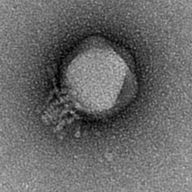
Gene identity, not recoding strategy, determines the fitness cost of synonymous recoding in bacteriophage ΦX174 | bioRxiv
Gene identity, not recoding strategy, determines the fitness cost of synonymous recoding in bacteriophage ΦX174

www.biorxiv.org

Gene identity, not recoding strategy, determines the fitness cost of synonymous recoding in bacteriophage ΦX174

Synthetic biology allows for the synthesis of genomes from scratch. Although technically achievable, our abilities in designing genomes that result in live organisms are in their infancy. One important consideration is synonymous codon usage bias, which is present in most organisms and shaped by selection for efficient translation. Many studies have edited the synonymous codon usage patterns of viruses with the goal of viral attenuation, but these studies almost always build a single construct per design, so we know little about how repeatable the effects of recoding are. We designed and built 111 synonymously recoded ΦX174 genomes, applying four recoding strategies at up to five levels of attenuation to each of three genes, with three independently designed replicates of most combinations. Which gene we recoded mattered considerably more than how we recoded it. Recoding genes for the major capsid protein F, the major spike protein G and the DNA pilot protein H in full, with the least-used synonym codons from E. coli cost 12.0, 10.8 and 5.9 doublings per hour, respectively. Recoding strategy per se had no detectable effect once the number of codons changed was accounted for. Predicted mRNA folding stability also had no measurable effect on fitness when tested in gene F, whose wildtype transcript is highly stable and could easily be destabilized with synonymous codon rearrangements. While the number of codons changed was correlated with the degree of attenuation, divergence between independently designed replicates increased as more codons were edited. Replicates of designs with small fitness effects varied little, while replicates of strongly attenuating designs diverged by several doublings per hour. The fitness outcome of large-scale genome recoding is therefore substantially unpredictable from the design variables alone: even among independently designed genomes receiving the same treatment, fitness can diverge substantially. ### Competing Interest Statement The authors have declared no competing interest. National Institute of General Medical Sciences, P20 GM104420, R01 GM076040
Replies0 Reposts0 Likes0
Tominaga K. (tomiken) @pacyc184.bsky.social · 2 days ago
Gene identity, not recoding strategy, determines the fitness cost of synonymous recoding in bacteriophage ΦX174 | bioRxiv
Gene identity, not recoding strategy, determines the fitness cost of synonymous recoding in bacteriophage ΦX174

www.biorxiv.org

Gene identity, not recoding strategy, determines the fitness cost of synonymous recoding in bacteriophage ΦX174

Synthetic biology allows for the synthesis of genomes from scratch. Although technically achievable, our abilities in designing genomes that result in live organisms are in their infancy. One important consideration is synonymous codon usage bias, which is present in most organisms and shaped by selection for efficient translation. Many studies have edited the synonymous codon usage patterns of viruses with the goal of viral attenuation, but these studies almost always build a single construct per design, so we know little about how repeatable the effects of recoding are. We designed and built 111 synonymously recoded ΦX174 genomes, applying four recoding strategies at up to five levels of attenuation to each of three genes, with three independently designed replicates of most combinations. Which gene we recoded mattered considerably more than how we recoded it. Recoding genes for the major capsid protein F, the major spike protein G and the DNA pilot protein H in full, with the least-used synonym codons from E. coli cost 12.0, 10.8 and 5.9 doublings per hour, respectively. Recoding strategy per se had no detectable effect once the number of codons changed was accounted for. Predicted mRNA folding stability also had no measurable effect on fitness when tested in gene F, whose wildtype transcript is highly stable and could easily be destabilized with synonymous codon rearrangements. While the number of codons changed was correlated with the degree of attenuation, divergence between independently designed replicates increased as more codons were edited. Replicates of designs with small fitness effects varied little, while replicates of strongly attenuating designs diverged by several doublings per hour. The fitness outcome of large-scale genome recoding is therefore substantially unpredictable from the design variables alone: even among independently designed genomes receiving the same treatment, fitness can diverge substantially. ### Competing Interest Statement The authors have declared no competing interest. National Institute of General Medical Sciences, P20 GM104420, R01 GM076040

Replies0 Reposts0 Likes1
American Peptide Society @americanpeptidesociety.org · 2 days ago
Phage display hands you binders that eventually let go. Gao and Zheng Groups tuned an α,β-unsaturated nitrile warhead into cyclic peptides, then screened against Keap1. Peptide 32: Ki 3.7 nM, reversible covalent at Cys434. americanpeptidesociety.or….

americanpeptidesociety.org

Covalent Phage Discovery - Yiwu Zheng Lab

Genetically encoded peptide libraries have long relied on noncovalent interactions, which may be insufficient at challenging protein interfaces. Researchers have now embedded tunable reversible covale...

Replies0 Reposts0 Likes0
American Peptide Society @americanpeptidesociety.org · 3 days ago
One enzyme, one linker, one step: the Lei Group at Lanzhou University macrocyclizes a whole phage-displayed library with tyrosinase-catalyzed tyrosine-aniline coupling. Biopanning against Keap1 gave a cyclic binder lasting 5 hours in mouse plasma, against 30 minutes linear.
Replies1 Reposts0 Likes0
ASM @asm.org · 3 days ago
Phage therapy could tackle antibiotic-resistant infections in people & animals. ASM Health is building phage therapy infrastructure to streamline operational complexity and generate robust evidence across species. Read the article: asm.social/3b5 #OneHealth #WAAW
Building One Health Infrastructure for Phage Therapy

asm.social

Building One Health Infrastructure for Phage Therapy

ASM Health is building phage therapy infrastructure for human and veterinary applications that aims to streamline the operational complexity and generate robust evidence across species.

Replies0 Reposts1 Likes1
@annadragos.bsky.social · 3 days ago
An important message from Phages in Toulouse🦠 So guess who is that guy😎
Replies1 Reposts2 Likes7
@id-journal.bsky.social · 3 days ago
Phage combinations improved killing of 2 MDR *E. faecium* isolates; LL-37 enhanced rapid phage activity, especially against DAP-R R497 (P<0.001). Triple therapy reduced R497 more than antibiotics alone (P<0.0001).

academic.oup.com

Characterization of human cationic peptide LL-37 activity against multidrug-resistant Enterococcus faecium in the context of bacteriophage–daptomycin–ampicillin combinations

AbstractSynopsisHost defence peptide cathelicidin LL-37 has been shown to synergize with antibiotics in vitro. However, this synergy has not been explored in combination with bacteriophage (phage).MethodsWe investigated the impact of bacteriophage plus daptomycin (DAP), ampicillin (AMP), or LL-37 against two multi-drug resistant (MDR) Enterococcus faecium isolates: DAP-susceptible dose-dependent HOU503 and DAP-resistant (DAP-R) R497. Assessments included bacterial survival analysis assays (2 and 4 h), 24 h growth suppression kinetics and time-kill analyses (TKAs).ResultsIn survival assays, R497 and HOU503 showed significantly greater killing at 4 h versus 2 h (R497: P = 0.0019; HOU503: P = 0.0029) in all regimens containing phage versus antibiotics alone. Against DAP-R R497, LL-37 enhanced phage activity in growth suppression assays, where it significantly reduced lag time compared to phage alone (P < 0.001). Likewise, in TKAs, phage combined with DAP + AMP + LL-37 yielded greater bacterial reduction over 24 h than antibiotics alone (P < 0.0001). LL-37 + phage regimen also outperformed LL-37 monotherapy (P < 0.0001). Against HOU503, the AMP + DAP + phage regimen demonstrated the most substantial bacterial reduction in 24 h TKAs. LL-37 modestly improved some combinations, especially with phage alone.ConclusionsLL-37 enhances the rapidity of phage bactericidal activity in the presence of antibiotic regimens, particularly within the first hours of exposure and most notably against R497. Our data support the efficacy of selected combinations against two MDR E. faecium isolates at crucial early stages of infection. These results highlight the need for experimental designs and clinical strategies that optimize and explore the impact of endogenous and exogenous anti-infective synergies in relevant timeframes and contexts.

Replies0 Reposts0 Likes0
Alexander Harms @aharms485.bsky.social · 3 days ago
Want to know about the functional diversity of bacteriophages and how we can unlock it for applications 🧬🧫🛠? I will give a public webinar hosted by Seqvision next Friday (27.11.) at 10:00 Central European time. The webinar is free but registration is obligatory - link below 👇🏼
Replies2 Reposts5 Likes14
bioRxiv Microbiology @biorxiv-microbiol.bsky.social · 3 days ago
Gene identity, not recoding strategy, determines the fitness cost of synonymous recoding in bacteriophage {Phi}X174 www.biorxiv.org/content/1…
Replies0 Reposts0 Likes1
bioRxivpreprint @biorxivpreprint.bsky.social · 3 days ago
Gene identity, not recoding strategy, determines the fitness cost of synonymous recoding in bacteriophage {Phi}X174 www.biorxiv.org/content/1…
Replies0 Reposts0 Likes0
European Virus Bioinformatics Center @evbc.bsky.social · 3 days ago
🦠#Phages do more than hijack bacterial metabolism! New review explores how phage-encoded transcription + sigma factors reprogramme host gene expression, reshaping cell functions and potentially influencing entire microbial ecosystems.🔬 📄 doi.org/10.1016/j.tim.202… 👤EVBC: Matt Sullivan

doi.org

Redirecting

Replies0 Reposts0 Likes1
@2001dalmatians.bsky.social · 3 days ago
There are firms that sell them to labs. I read about students watching under a microscope as e. Coli cells fell apart when they added a bacteriophage.
Replies0 Reposts0 Likes1
Humanimal Trust @humanimaltrust.bsky.social · 3 days ago
This World #AMRAwarenessWeek, we're highlighting the potential of bacteriophage therapy – an innovative approach that uses viruses to target harmful bacteria, including antibiotic-resistant strains. Read more from Bushra and Louise van der Weyden: bvajournals.onlinelibrary….
Replies0 Reposts0 Likes1
International Microbiology Literacy Initiative - IMiLI @imili-micro.bsky.social · 3 days ago
What if viruses could help us fight bacteria? Bacteriophages are opening exciting doors in medicine, sustainable agriculture, food safety and gene editing through CRISPR-Cas9! Tiny viruses. Powerful biotech solutions. #Biotechnology #PhageTherapy #CRISPR grupos.eez.csic.es/imili/….
Replies1 Reposts1 Likes1
Wearn Xin (Edeline) @wearnxin.bsky.social · 3 days ago
My third postdoc paper with @jbdsf.bsky.social is now out in Cell Host Microbe! We did a deep dive into the clinically relevant phages Pbunaviruses, identified its receptor, and found that it can be masked by OAg. Many thanks to Joe and our collabs from Jasons's (UWM) and Tanmay's (LMB) lab!
Replies1 Reposts7 Likes26
phy_papers @phypapers.bsky.social · 3 days ago
The virome of New Zealand fur seals reveals novel viral diversity and evidence of continued Canine distemper virus circulation www.biorxiv.org/content/1…
Replies0 Reposts0 Likes0
Sofi the Corgi @soficorgi.bsky.social · 3 days ago
I don’t follow video games but that kind of looks like a bacteriophage lol
Replies1 Reposts0 Likes1
Joshua Weitz @joshuasweitz.bsky.social · 3 days ago
Final contributed talk from Sarshad Koderivalappil via the Mutalik lab: “Massively Parallel Lineage Tracking Uncovers Hidden Population Dynamics in Phage-Bacteria Coevolution”, including mechanisms to look deeply into the shift in lineages in phage-bacteria coevolution.
 Sarshad Koderivalappil,	“Massively Parallel Lineage Tracking Uncovers Hidden Population Dynamics in Phage-Bacteria Coevolution”
Replies0 Reposts0 Likes0
bioRxivpreprint @biorxivpreprint.bsky.social · 3 days ago
The virome of New Zealand fur seals reveals novel viral diversity and evidence of continued Canine distemper virus circulation www.biorxiv.org/content/1…
Replies0 Reposts0 Likes1
bioRxiv Microbiology @biorxiv-microbiol.bsky.social · 3 days ago
The virome of New Zealand fur seals reveals novel viral diversity and evidence of continued Canine distemper virus circulation www.biorxiv.org/content/1…
Replies0 Reposts0 Likes0
Joshua Weitz @joshuasweitz.bsky.social · 3 days ago
Including data showing that depending on nutrient conditions, phage and bacterial GC codon concentration can diverge, such that phage GC can become substantially lower than that of hosts, and even become decoupled in phages encoding tRNAs in the surface waters.
Replies1 Reposts0 Likes0
Joshua Weitz @joshuasweitz.bsky.social · 3 days ago
Next up: Alice Turnham shares results on “Oligotrophic conditions drive depth-specific adaptations in freshwater viruses” focusing on the Great Lakes, e.g., www.biorxiv.org/content/1….
Alice Turnham speaking - part of her recent work on depth-structured infection of phages in the Great Lakes.
Replies1 Reposts0 Likes0
Keep reading on Bluesky